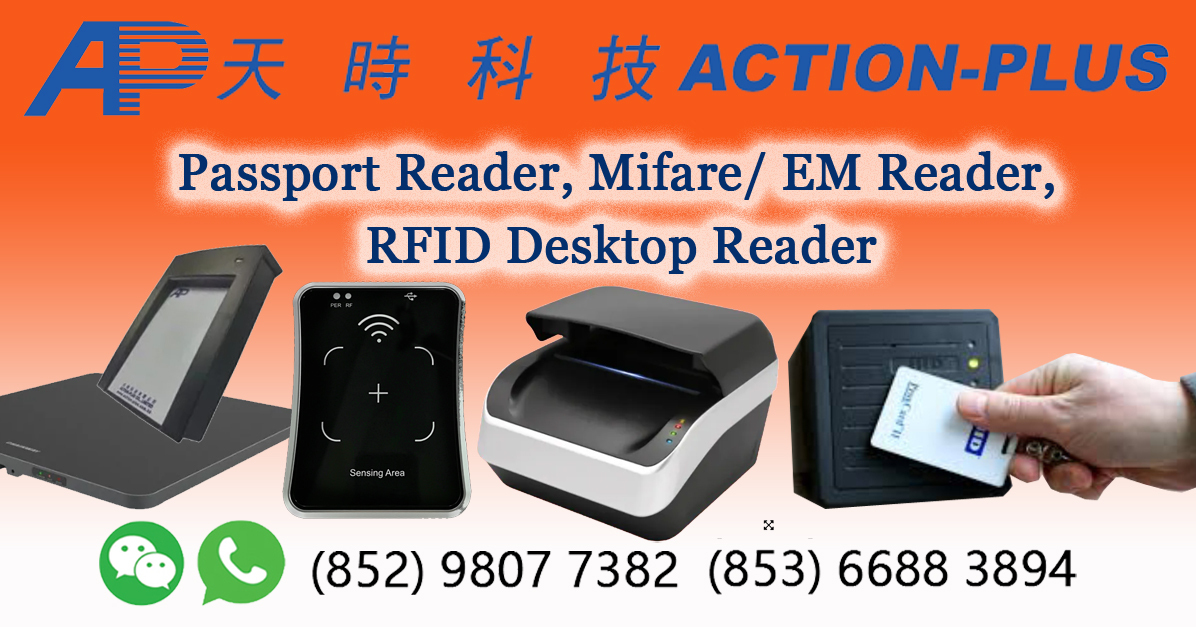
APC-R3 Desktop UHF RFID Reader (often designated as R3C for its Type-C interface configuration) is a high-performance, short-range RFID reader designed for desktop deployment and close-proximity data capture.
Here is a comprehensive breakdown of its technical specifications, features, and core applications:
⚙️ Core Technical Specifications
- RFID Module & Chips: Built on high-performance Impinj E310 or E510 chips (CM310-4 / CM510-4 modules), ensuring accurate tag processing.
- Frequency & Protocols: Supports global UHF frequencies (China, US, Europe standards) and complies with EPC C1G2 (ISO18000-6C) protocols.
- Read Distance: Equipped with an integrated circularly polarized antenna, optimized for a precise range of 0 to 50 cm (extending up to 1m depending on tags and environments), effectively preventing accidental misreads of adjacent tags.
- Anti-Collision: Utilizes an advanced anti-collision algorithm to efficiently read multiple tags simultaneously in dense environments.
🛡️ Physical Design & Durability
- Dimensions & Weight: Measures 318 mm × 318 mm × 20 mm and weighs approximately 1,133g.
- Industrial Protection: Features an IP65-rated sealing, making it highly resistant to dust and water splashes in busy commercial or light industrial environments.
🔌 Connectivity & Compatibility
- Dual Interfaces: Connects via USB Type-C (R3C) for data transmission and power, or wirelessly via Bluetooth Low Energy (BLE 4.0).
- Platform Support: Offers comprehensive Software Development Kits (SDKs) compatible with Windows, Android, and iOS platforms.
💼 Target Applications
This device is widely deployed in environments requiring secure, close-range bulk tag identification, including:
- Retail Apparel & Cashier Counters: For swift checkout processing and anti-theft tagging.
- Jewelry Management: High-value inventory tracking on display mats or trays.
- Library & Document Archiving: Streamlining check-ins, check-outs, and sorting files.
- Medical Consumables & Lab Tracking: Keeping tabs on precise medical supplies.
RFID desktop readers (also known as desktop readers or card issuers) are primarily used in short-range RFID scenarios such as offices, libraries, retail checkouts, and asset registration.
UHF RFID desktop readers (operating frequency 860–960MHz) are mainly used for short-range UHF tag issuance, merchandise registration, asset initialization, and retail checkout. Unlike long-range fixed or handheld UHF devices, desktop models typically limit their sensing range (approximately 10–80 cm) to prevent misreading of other unrelated electronic tags around the desktop.
Selection and Integration Guide: Connection Interface: Most desktop readers use USB (Type-C or Type-A) cables. Some models support keyboard emulation (plug and play; the card number is automatically entered at the computer cursor when swiping).
SDK and Software Development: If you need to develop your own inventory management or access control system, you must confirm whether the manufacturer provides a free SDK (Software Development Kit) that supports your operating system (such as Windows, Linux, or Android).
Desktop UHF RFID Reader/Writer:
Core Specifications: Supports ISO/IEC 18000-6C and EPC Class 1 Gen 2 protocols; frequency band adjustable between 865-868 MHz and 902-928 MHz.
Read/Write Distance: Maximum reading distance of 0.8 meters, writing distance of approximately 0.3 meters, adjustable based on deployment environment.
Integration Interface: Equipped with USB and Type-C interfaces; the manufacturer provides an SDK kit for easy integration with existing logistics or asset management systems.
Key Feature: Supports HID Profile (Native Keyboard Simulation) mode. This means it requires no driver or development software installation; simply plug in the USB Type-C port, and the tag number will automatically be entered at the computer cursor position as if typed on a keyboard, making it ideal for older systems where the original code cannot be modified.
Core Selection Criteria for UHF Desktop Readers: National Frequency Band Specifications (Region): UHF frequency bands are not globally standardized.
Hong Kong and Asia primarily use 920–925 MHz, Europe uses 865–868 MHz, and the United States uses 902–928 MHz. When purchasing, ensure the device supports your local frequency band, or choose a "full-band/tunable" model. Transmission and Output Modes: Virtual Keyboard Emulation (HID): Plug and play, suitable for scenarios where you simply want to retrieve the tag's EPC number to an Excel spreadsheet or web form.
VCP (Virtual Serial Port)/Raw Data: Requires development via the SDK to call the API, enabling deep encrypted reading and writing of the tag's User Bank and Reserved Bank (e.g., modifying product prices, writing employee IDs).
Antenna Polarization:
Linear Polarization: The tag's orientation (horizontal or vertical) must be parallel to the reader for optimal reading.
Circular Polarization: The tag can be smoothly sensed from above regardless of its rotation angle, making desktop operation more convenient.
🚀 Transform Your Business with 25+ Years of RFID Expertise! 🚀
Looking to upgrade your operations, streamline tracking, or achieve seamless digital transformation? Action-Plus Co. Limited is your trusted one-stop partner!
With over a quarter-century of deep market experience, we specialize in:
🔹 RFID Solutions (Over 100+ projects successfully deployed!)
🔹 Automatic Identification & Data Capture (AIDC)
🔹 Tailored CRM Systems
🌍 Our Footprint:
Serving Hong Kong, Macau, Zhuhai, and the Greater Bay Area (GBA).
🏥 Who We Serve:
We provide comprehensive cloud management systems and professional maintenance support tailored for Government, Healthcare, Retail, and various other industries.
🐼 Highly recommended by "Brother Panda" (熊貓哥), our proven track record across diverse application scenarios ensures your business stays efficient and future-ready.
📩 Contact Action-Plus Co. Limited today to unlock your business's full potential!
#ActionPlus #RFID #AIDC #CRM #DigitalTransformation #CloudManagement #SmartRetail #HealthcareTech #GBA #HongKongTech #LogisticsSolutions #BrotherPanda